Mount Teide Stargazing Tours: Options, Prices & Reviews
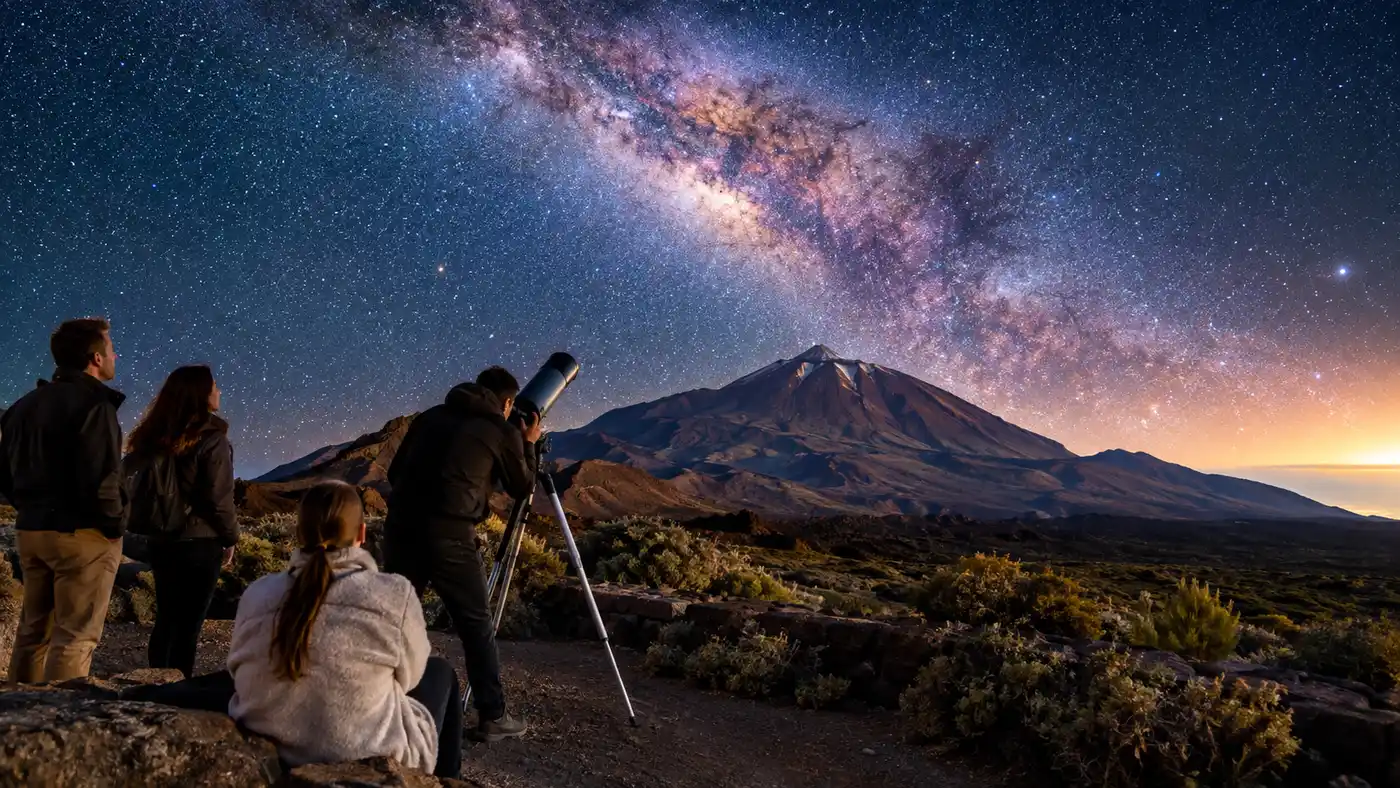
Standing in the crater of Mount Teide at 10:30 at night will freeze your fingers within six minutes. The wind blows straight off the Atlantic, whistles through volcanic pumice, and cuts through thin denim like paper. Yet you forget to put your hands in your pockets because the sky above you looks fake. Out here at 2,200 meters above sea level, you are standing well above the thermal inversion layer that traps the coastal cloud deck below. The air is bone dry, thin, and black as pitch. Booking a reliable mount teide stargazing tour is hands down the easiest way to see this sky without having to navigate pitch-black, hairpin mountain roads in a beat-up rental car after midnight.
Hundreds of operators sell some version of this evening excursion. Some cram 55 passengers onto a double-decker motorcoach, hand you a plastic cup of warm cava at sunset, and point a green laser at Ursa Major for twenty minutes before herding you back into the bus. Others provide custom four-wheel-drive vans, astronomical laser pointers, and high-end motorized Schmidt-Cassegrain telescopes run by Starlight-certified astrophysicists. Prices run anywhere from €35 for bare-bones transport to upwards of €600 for a private, bespoke night run. I spent time comparing the standard itineraries, digging into real traveler feedback, and freezing my own toes off on the caldera floor to help you figure out which trip matches your budget and expectations.
Book your stargazing tenerife experience:
What Happens on a Mount Teide Stargazing Tour?
Most evening excursions follow a similar timeline, dictated by the setting sun and the geography of the island. Pickup generally starts in the late afternoon around the major resort hubs in Playa de las Américas, Costa Adeje, Los Cristianos, or Puerto de la Cruz. From there, the drive up into Teide National Park takes anywhere from 60 to 90 minutes. You climb through several distinct microclimates, starting in sunny arid coastline, grinding through a damp belt of Canarian pine forest, and breaking through the cloud line into the surreal volcanic expanse of the Las Cañadas caldera.
The first stop on almost every itinerary is a sunset viewpoint, often near the famous Roques de García rock formations or along the western edge of the caldera near Boca Tauce. Watching the sun dip into the cloud sea surrounding the neighboring islands of La Gomera and La Palma is genuinely spectacular. The colors shift from burnt orange to bruised violet across the volcanic badlands. If your tour includes food, you will usually stop at an altitude restaurant in Vilaflor or inside the park itself for a three-course rustic meal and local wine before the real darkness sets in.
Once dusk settles into true astronomical night, the guide drives the group to a designated parking area or plateau away from headlight sweep. Out come the telescopes, folding chairs, and laser pointers. A skilled guide will spend the next 90 minutes to two hours guiding you through the celestial sphere, explaining navigational stars, visible planets, distant nebulae, and binary star systems.
Note: Temperatures inside the national park routinely plunge to freezing between November and April, and even midsummer nights hover around 6 to 9 degrees Celsius. Tour buses have heating, but you will spend up to two hours stationary on bare gravel, so pack winter-weight layers regardless of daytime beach weather.
Mount Teide Stargazing Tour Formats: Group vs Private
The sheer variety of stargazing trips in tenerife makes it tricky to compare prices on face value alone. A €40 tour and a €120 tour might sound identical on a booking platform, but the physical reality on the mountain is completely different.
Mass-market coach excursions, commonly marketed under the banner of "Teide by night" or "El Teide by night," cater to large volumes. You travel on a large luxury bus, usually with 40 to 50 other travelers. Sunset is communal, dinner is served buffet-style in massive banquet halls, and the stargazing portion takes place in large paved turnouts. Because of the sheer crowd size, telescope viewing is tightly rationed. You might stand in line behind 35 people to get an eight-second glimpse of Saturn's rings through a single telescope. If you just want a pleasant evening ride, a glass of wine, and an overview of the constellations, this format works well enough for the price.
Small-group tours cap registration at 8 to 14 participants. These usually deploy Mercedes Sprinter vans and set up camp on dirt pull-outs deeper inside the national park, far away from the coach parking bays. Smaller numbers mean you get significant eyepiece time on high-aperture telescopes, often 8-inch to 11-inch computerized reflectors. The guides are frequently working astronomers or heavily trained Starlight Foundation monitors who can tailor the conversation to how much astrophysics you actually want to digest.
At the top end, a private stargazing tour tenerife experience gives you exclusive access to a professional astronomer and their gear. You choose the pickup time, you can stop for photography wherever the light hits best, and you have continuous, uninterrupted use of professional tracking equipment. Families with young children or serious amateur photographers often find this format worth the steep upfront cost.
| Tour Format | Average Price | Group Size | Telescope Access | Best Suited For |
|---|---|---|---|---|
| Standard Coach (Teide by Night) | €45 - €70 | 35 - 55 people | Minimal (1 telescope for group) | Casual travelers on a budget |
| Small-Group Stargazing | €85 - €130 | 8 - 14 people | Generous (1-2 high-end scopes) | Night-sky enthusiasts & couples |
| Sunset, Dinner & Astronomy | €110 - €160 | 12 - 25 people | Moderate | Celebrations and relaxed evenings |
| Private VIP Astronomy Excursion | €380 - €650 | 1 - 6 people (flat rate) | Continuous, personalized | Photographers, families, enthusiasts |
What Equipment and Expertise Should You Expect?
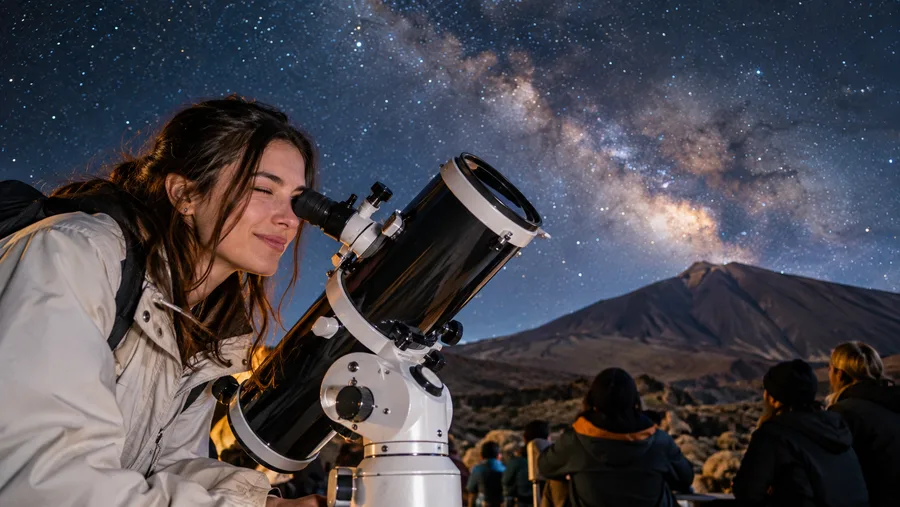
Not all telescope experiences are equal. If you are paying for an astronomy excursion, it helps to understand what the operator brings up the hill. Basic operators sometimes use cheap 70mm refractor scopes that do little more than show you blurry craters on the moon. If the moon is not visible, those scopes struggle to resolve anything beyond fuzzy white dots.
Reputable operators bring computerized Schmidt-Cassegrain or large Dobsonian reflector telescopes. These instruments have mirrors eight to eleven inches across, capable of pulling in faint light from deep-sky objects like the Orion Nebula, the Hercules Globular Cluster, or the Andromeda Galaxy. Looking at the rings of Saturn or Jupiter's Galilean moons through an 11-inch Celestron optics system is an experience that stays with you for decades.
Guide certification matters just as much as glass. Tenerife teide national park stargazing is regulated under the Starlight Foundation, an international body linked with UNESCO that protects dark sky reserves. Starlight-certified guides have passed strict exams in both astronomy and public interpretation. They carry high-powered green laser pointers that appear to reach directly into the sky, tracing the boundaries of constellations and making order out of thousands of pinpricks of light.
Pro tip: Schedule your tour within five days of the new moon. If you book during a full moon, the lunar glare washes out deep-sky nebulae and the Milky Way entirely, although the moon itself looks remarkably crisp through an eyepiece.
Book your stargazing tenerife experience:
Dinner Packages and Sunset Add-ons: Are They Worth It?
Many operators bundle dinner into their teide stargazing tour tenerife price. These packages range from cold picnic boxes eaten at the viewpoint to sit-down meals in rustic bodega restaurants located in the mountain hamlets of Vilaflor or Santiago del Teide. If you are weighing whether to pay the extra €30 to €50 for an evening that includes a meal, it pays to look closely at what is served.
Standard bus tour meals tend to be predictable tourist fare: vegetable soup, roast chicken with papas arrugadas (wrinkly Canarian potatoes with spicy mojo sauce), and a basic dessert, accompanied by unlimited jug wine. It is hearty enough, but hardly gourmet. Some boutique companies, however, offer high-end tapas, local goat cheeses, and award-winning volcanic wines from high-elevation vineyards like Altos de Trevejos. You can read more about how these evenings run in our breakdown of Mount Teide sunset and stargazing tours and dinner experiences.
If you prefer better control over your meals, choose a tour that focuses purely on sunset and astronomy without a restaurant stop. You can eat an early dinner down on the coast, or pack your own thermos of hot tea, cured ham, and crusty bread to enjoy while watching the twilight fade over the crater.
Evaluating Mount Teide Stargazing Reviews: What Real Travelers Say
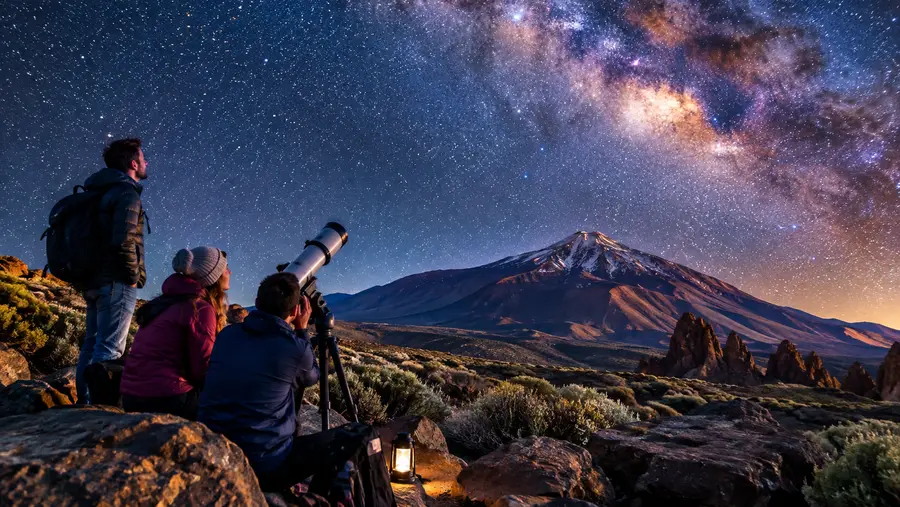
Reading through hundreds of stargazing tenerife reviews reveals stark patterns. The vast majority of travelers award these excursions five stars, calling it the absolute highlight of their Canary Islands holiday. However, the one-star and two-star reviews are almost always caused by three avoidable problems.
- Unprepared for bitter cold: Travelers dressed for the beach spend the entire astronomy session shivering in the bus doorway instead of looking through the telescopes.
- Unlucky weather cycles: While Teide sits above normal clouds 80% of the year, winter storms or summer dust storms from the Sahara (calima) can temporarily obscure the sky. The best companies offer free date rescheduling when conditions deteriorate.
- Disappointment during full moon: Tourists expecting to see the bright dusting of the Milky Way during a 98% illuminated full moon leave frustrated because the sky is as bright as a twilight evening. Check our guide on the best time to stargaze in Tenerife to avoid timing errors.
- Long hotel pickup runs: On standard coach tours, spending 90 minutes circling every hotel in Los Cristianos before even beginning the mountain climb drains everyone's patience.
The standout reviews consistently praise the guides. A knowledgeable astronomer transforms what could be a cold, static lecture into a genuinely thrilling journey through space and Canarian history. The Guanches, Tenerife's aboriginal inhabitants, used these exact mountain peaks for their own celestial navigation centuries before European sailors arrived, and hearing those stories under the stars brings the black landscape to life.
Frequently Asked Questions about mount teide stargazing tour
What is the best month for a Mount Teide stargazing tour?
Summer months from June through September bring the clearest skies and optimal positioning for viewing the galactic core of the Milky Way. Winter offers incredible clarity for planetary viewing and crisp constellations like Orion, but sub-zero night temperatures are common.
Can young children enjoy a Teide stargazing excursion?
Children over age six usually enjoy looking through the telescopes and seeing the green laser pointers, provided they are dressed warmly. Younger toddlers often struggle with the late-night timing, freezing temperatures, and long travel hours in the dark.
What happens if it is cloudy or raining on the night of my tour?
Coastal rain rarely impacts the park because the caldera sits above the cloud layer at over 2,000 meters. If severe high-altitude storms, high winds, or heavy calima dust roll in, reputable operators will contact you in the afternoon to reschedule your booking or issue a refund.
Will altitude sickness affect me during the tour?
Most stargazing sites sit between 2,100 and 2,300 meters. While you might feel slightly short of breath walking uphill across gravel, severe altitude sickness is uncommon at this elevation. Walking slowly and staying hydrated easily prevents mild headaches.
Quick Reference
- Starlight Reserve altitude: 2,100m to 2,350m
- Average night temperatures: 0°C (winter) to 11°C (summer)
- Small-group prices: €85 to €130 per person
- Drive time from south coast: 60 to 75 minutes
Book your stargazing tenerife experience:
The Bottom Line
Watching the rings of Saturn tilt through an eyepiece while standing on an ancient volcano is one of those rare travel experiences that genuinely justifies the cost. If your budget allows, skip the 50-person coach buses and book a small-group tour capped at a dozen people with Starlight-certified astronomers. Bring an insulated winter jacket, a beanie, and an open mind, and you will understand why this desolate volcanic park is considered one of the three finest stargazing windows on planet Earth.
Read more about stargazing tenerife.